Friday, July 18, 2014

Stores, Shops and Markets - part 2

A vegetable stand in  market in Zejtun, Malta
A few more photos of various stores, open-air markets and shops from Malta, colorful as always, intriguing to say the least and always surprising of what you might come across.
A typical green-grocer with just about everything you need
The market in Zejtun offered an interesting photo, besides clothing
"Saddles" - a well-known bar in St Julian's
An old-time landmark in St Julian's - Dick's Bar

Thursday, July 17, 2014

Stores, Shops and Markets - part 1

A typical Maltese Bar named Bellusa (The Satin One)
Today and tomorrow I will share with you some of the shops, stores and markets that are popular in Malta, of course from some of the photos I took recently. We do have a few supermarkets, but nothing like a Walmart or Costco that Americans are used to. But most stores and shops are small ones nestled between houses and sometimes in busy commercial streets like the ones in the capital city Valletta and busy towns like Sliema and my hometown of St Julian’s. 
A street vegetable vendor in the town of Mellieha
Greengrocers are quaint and peculiar in a way as their grocer owners go around in a van or truck and display their vegetables and fruits around the van while shoppers stroll around, pick and choose and then pay for their products. But most of these vegetable are guaranteed to be fresh, possibly picked from fields and gardens earlier in the day or the previous day, nothing beyond that.
Souvenir shop in Valletta
And something typically Maltese
More photos of front stores, shops and markets to appear tomorrow

Wednesday, July 16, 2014

Our Lady of Mount Carmel

Our Lady of Mount Carmel, Balluta church, Malta
According to a pious tradition, the Blessed Virgin appeared to St Simon Stock at Cambridge, England on Sunday June 16, 1251. In answer to his appeal for help for his oppressed order, she appeared to him with a scapular in her hand and said to him:”Take, beloved son, this scapular of your order as a special sign of grace for all Carmelites; whoever dies with this scapular, will not suffer everlasting fire. It is a sign of salvation, a safeguard in danger, a pledge of peace.”
The Carmelites are a religious order founded on Mount Carmel in the 13th century, named thus in reference to the mountain range found in the Holy Land. The founder was a certain Berthold, who was either a pilgrim or a crusader. The order was founded at the site that it claimed had once been the location of Elijah’s cave, 1700 feet above sea level.
Carmelites Church, Valletta, Malta
By 2001, there were 2,100 religious monks in 25 provinces in the Carmelite order, besides 700 enclosed nuns in 70 monasteries. In addition, the Third Order of lay Carmelites count 28,000 members throughout the world. Besides St Simon Stock, there are other Carmelite saints such as St Therese of the Child Jesus, St John of the Cross, St Teresa Benedicta of the Cross, St Theresa of Avila and even Sister Lucia of Fatima. The statues appearing with this entry are from Malta, where devotion to Our Lady of Mount Carmel is widespread, especially in parishes dedicated to her, Valletta, Balluta, Gzira, Fleur-de-Lys and Zurrieq.

Tuesday, July 15, 2014

St. Bonaventure

St Bonaventure as Bishop of Albano, with St Francis
He was born at Bagnoregio in Latium, not far from Viterbo in 1221 and named John as a child. He received the name of Bonaventure in consequence of an exclamation of St. Francis of Assisi, when, in response to the pleading of the child's mother, the saint prayed for John's recovery from a dangerous illness, and, foreseeing the future greatness of the little John, cried out "O Buona ventura"- O good fortune!  He entered the Franciscan Order in 1243 and studied at the University of Paris. In 1253 he held the Franciscan chair at Paris where he became the intimate friend of the great St. Thomas Aquinas. Unfortunately for Bonaventure, a dispute between seculars and mendicants delayed his reception as Master until 1257, where his degree was taken in company with Thomas Aquinas. He received the degree of Doctor, together with St. Thomas Aquinas. Three years earlier his fame had earned him the position of lecturer on the The Four Books of Sentences—a book of theology written by Peter Lombard in the twelfth century—and in 1255 he received the degree of master, the medieval equivalent of doctor.
After having successfully defended his order against the reproaches of the anti-mendicant party, he was elected Minister General of the Franciscan Order. On 24 November 1265, he was selected for the post of Archbishop of York; however, he was never consecrated and resigned the appointment in October 1266. During his tenure, the General Chapter of Narbonne, held in 1260, promulgated a decree prohibiting the publication of any work out of the order without permission from the higher superiors.
Bonaventure was instrumental in procuring the election of Pope Gregory X, who rewarded him with the title of Cardinal Bishop of Albano, and insisted on his presence at the great Second Council of Lyon in 1274. There, after his significant contributions led to a union of the Greek and Latin churches, Bonaventure died suddenly and in suspicious circumstances. The Catholic Encyclopedia has citations which suggest he was poisoned. The only extant relic of the saint is the arm and hand with which he wrote his famous Commentaries on the Book of Sentences.
He steered the Franciscans on a moderate and intellectual course that made them the most prominent order in the Catholic Church until the coming of the Jesuits. His theology was marked by an attempt completely to integrate faith and reason. He died while he was assisting at the Second Council of Lyons, on July 15, 1274.

Monday, July 14, 2014

Isaiah 55:10-11

Occasionally some parishioner asks me to include in my blog a quote or a reflection that I used in one of my homilies or article that I wrote. Someone from time to time remembers a quote I used in the past and they ask me to try to remember what they had heard but forgotten, which is usually impossible to remember. But this weekend a parishioner asked to do a visual meditation on a reading from Isaiah we used in our liturgy yesterday. It speaks about the blessings we receive from God, especially in the form of rain or snow, which then makes the earth fertile and productive. In the same way, the Word of God reaches our ears and leaves an impact, changing our lives forever. This quote parallels the parable of the seed and the sower we also reflected on in yesterday’s beautiful Gospel. But here is the quote from Isaiah, chapter 55, verses 10 and 11:
Thus says the LORD:
Just as from the heavens the rain and snow come down and do not return there till they have watered the earth, 

making it fertile and fruitful,
giving seed to the one who sows and bread to the one who eats, so shall my word be that goes forth from my mouth;
my word shall not return to me void, but shall do my will,
achieving the end for which I sent it.

Sunday, July 13, 2014

My soccer career

As a mascot of the local soccer team
Today being such a big day for soccer enthusiasts, (World Cup Final) I cannot let this moment go by without sharing three very special photos I have that highlight my soccer career, which was very minimal and pretty uneventful. The first two show me as a ball-boy or mascot of the St Julian’s team from 1958. 
St Julian's Soccer team from 1958
That team included two uncles and two cousins - so you can say it was all-in-the-family. The other one comes from 1972 when I was in the Seminary and I was mostly responsible for the sporting activities. One of the treasured activities was organizing a seven-a-side soccer league between all the seminarians, and my target was to encourage every one to take part, including some who were clumsy, awkward and very uninterested in playing. But it was a huge success. 
This photo shows my team, all of us priests now, some of them ordained 37, others 40 and other 42 years ago. I’m sure you can recognize me as the skinny goalkeeper on the left, back row.

Saturday, July 12, 2014

The Popes' World Cup

It is hard to believe that out of the 32 nations that took part in the World Cup held in Brazil, (not to mention the 120 nations that took part in the preliminary rounds) the two finalists are the same countries from where the two living Popes are from. We all know Pope Benedict XVI as Joseph Ratzinger, originally from Germany, who spent a lot of time praying over the past 18 months. Now many people know what he was praying for, among other things of course. Was he praying that his nation will demolish Brazil by beating 7 to 1? Or was he praying simply to get to the final and then carry the trophy home. Most probably he was praying for peace in the world, harmony within the Catholic church, and for his successor. 
And how about Pope Francis, who as Jorge Bergoglio came from Argentina and changed the face of the church over the past 18 months. Yet he also finds time to pray and even though his team was not as spectacular or destructive as the Germans, they made it to the finals anyway. And his prayers gave the fruit needed to see Lionel Messi and his friends trying to win the trophy for the third time. 
We’ll see whose prayers are the most effective on Sunday when they play each other in the holiest and most spiritual of World Cup Finals ever played. There’s more at stake than a simple trophy here. May the best team win!

Friday, July 11, 2014

St Benedict's Medal

The medal of St Benedict, front and back.
Today being the feast of Saint Benedict, I thought of sharing with you the symbolism of the medal that had widespread use after its formal approval by Pope Benedict XIV in the 18th century. The medal is used by Catholics to ward off spiritual and physical dangers, especially those related to evil, poison, and temptation. On the front of the medal is Saint Benedict holding a cross in his right hand, the object of his devotion, and in the left his rule for monasteries. In the back is a poisoned cup, in reference to the legend of Benedict, which explains that hostile monks attempted to poison him: the cup containing poisoned wine shattered when the saint made the sign of the cross over it (and a raven carried away a poisoned loaf of bread). Above the cup are the words "Crux Sancti Patris Benedicti" (The Cross of our Holy Father Benedict). Surrounding the figure of Saint Benedict are the words “Eius In Obitu Nostro Praesentia Muniamur!” (May we be strengthened by his presence in the hour of our death), since he was always regarded by the Benedictines as the patron of a happy death.
On the back is a cross, containing the letters C S S M L - N D S M D, initials of the words "Crux Sacra Sit Mihi Lux! Non Draco Sit Mihi Dux!" (May the holy cross be my light! May the dragon never be my overlord!). The large C S P B stand for Crux Sancti Patris Benedicti (The Cross of [our] Holy Father Benedict). Surrounding the back of the medal are the letters V R S N S M V - S M Q L I V B, in reference to “Vade Retro Satana! Nunquam Suade Mihi Vana! Sunt Mala Quae Libas. Ipse Venena Bibas!" (Begone Satan! Never tempt me with your vanities! What you offer me is evil. Drink the poison yourself!) and finally, located at the top is the word PAX which means "peace."

Thursday, July 10, 2014

The Italian Voice

Sister Cristina Scuccia
I am not familiar with shows on TV that matches competitors for the best performance like “America’s Got Talent,” “The Voice” and others. But the Italian TV recently hosted “The Italian Voice” seeking to find new talent of voices to follow the success of Luciano Pavarotti, Andrea Bocelli, Cecilia Bartoli and other pop performers like Gianni Morandi, Claudio Villa, Orietta Berti and others. Among the competitors was a nun, Sister Cristina Scuccia, who eliminated one performer after another to eventually end up the winner.
"What Sister Cristina has done can be considered going out to the peripheries, because she has gone to a different stage to bear witness to her choice of life, and in this sense I think she has hit the target," Father Alejandro Diaz, a Colombian, said in a recent interview with CNA. Like Sister Cristina, he explained, "we have to come out ourselves to speak of God to others, not in the abstract, but about what God has done in our lives." At the beginning of June, the 25 year-old religious won The Voice Italy and gained world-wide acclaim for her charisma and ability to bring share the Word of God with the public.

Sister Cristina performing live on RAI TV
"I have a dream, which is to hold hands and pray together the Our Father," she told the studio audience when she won. "I want Jesus to enter into here." Sister Cristina sings but she also talks about God and invites people to pray. She wants to transmit a gift, and it was not only the gift of her singing ability but also the gift of her vocation, because she is a young religious who went on this stage without fear and said, 'I am a religious, I believe in God.'” Sister Cristina should not be made into an idol but should be seen as a means of reaching God, because the Holy Spirit will always be the great evangelizer, and he doesn't have only one method or stage for bring people close to Christ. There are many ways to evangelize and Sister Cristina has shown us one of them.
Music can be a channel for speaking of God and conveying an explicit message based on the Gospel. In her first statements to the media after her win, Sister Cristina Scuccia said she would now "return to my priorities, which are Jesus and prayer." Since then, she has made only two public appearances, one on June 14 on the TV2000 program "Good News Festival," and another on June 27 on the Rai2 program "Donne ad alta quota."

Wednesday, July 9, 2014

Sympathizing with Brazil

The great Brazil team that beat Italy 4-1 in the final of World Cup 1970
Everyone is talking about it! The trashing that Brazil received from Germany yesterday in the World Cup semi-final. It was to say the least embarrassing, humiliating and outright unbelievable.....losing 7-1 in front of your own crowd, in your own country. This is the kind of result usually attained by a Division 3 team when they’re playing a Division One team. With all due respect, even Malta would get such a result when playing against the big teams like Germany, Italy, England and Brazil themselves. But today I want to sympathize with Brazil, and quote the beginning of an article I wrote about “Getting the whole picture” in last Sunday’s Bulletin. My purpose of the article is to encourage the people to see all the good things that are happening in our parish and not to be discouraged if occasionally something goes wrong. This selected quote could not be more perfect for this situation...
“With the World Cup being played right now in Brazil, a spectacle which, like the Olympic Games, is held every four years, the whole world is focused on following the games being played in various stadiums all over Brazil. Surprises obviously were not uncommon, as three of the major countries, which between them won six Word Cup Championships in total, were all eliminated in the early stages. Italy won the cup four times, England once, and Spain once, precisely four years ago in 2010, but none of them made it through the second round, being eliminated and, in their fans’ estimation, humiliated.

Front page of one of Brazil's newspapers today
So another nation will win this year’s edition, possibly Brazil—the host nation—or Argentina, Germany, Holland, or an y other nation that surprisingly impressed in the early stages. But the eliminated nations should look at the whole picture, and cherish the successes they’ve had in the past— something that many other nations never experienced. Granted that there is a lot of soul-searching going on right now, as well as blaming their coaches, their millionaire star players who flunked this time, but the world will not end with this World Cup edition. Others will follow, and another surprising team may shine when nobody expected them to, as did Costa Rica, Colombia, and Belgium in the early stages—all of which are underrated teams but rose to the occasion this year in Brazil.” 

The Brazil team that beat Sweden 5-2 in World Cup 1958
Brazil won the World Cup 5 times, in 1958, 1962, 1970, 1994 and 2002, and they have absolutely nothing to be ashamed of. Granted the expectations were high, but as I wrote in my article, let’s get the whole picture here. Brazil did not win this year, but I hope they remember the glory days, as well as their illustrious stars like Pele, Rivelino, Ronaldo, Carlos Alberto, Falcao and so many others. Yes they were trounced in one single game, but their illustrious history is nothing to be ashamed of, especially when so many other nations never even made it to any semi-final in past World Cups.
Yet another front page from Brazil's newspapers

Tuesday, July 8, 2014

Up close in Malta

The Maltese cross made out of filigree
I've shown you various images of Malta from my recent visit there, but when you get up close and personal with close-ups of various items, you will see the craftiness of the Maltese people in creating objects from what is available to them. This could be clay, limestone or simple designs with filigree, as these photos show. Church paraphernalia is very popular in the Maltese Islands and clay figurines of the many characters one finds around a church are very common, similar to the statuettes or figurines or pasturi we see in Maltese nativity scenes.
Statues, candlesticks and monsignori all made from clay
A decorative Maltese Cross carved out of limestone

Monday, July 7, 2014

Optical Illusions

Who's waving the flag?
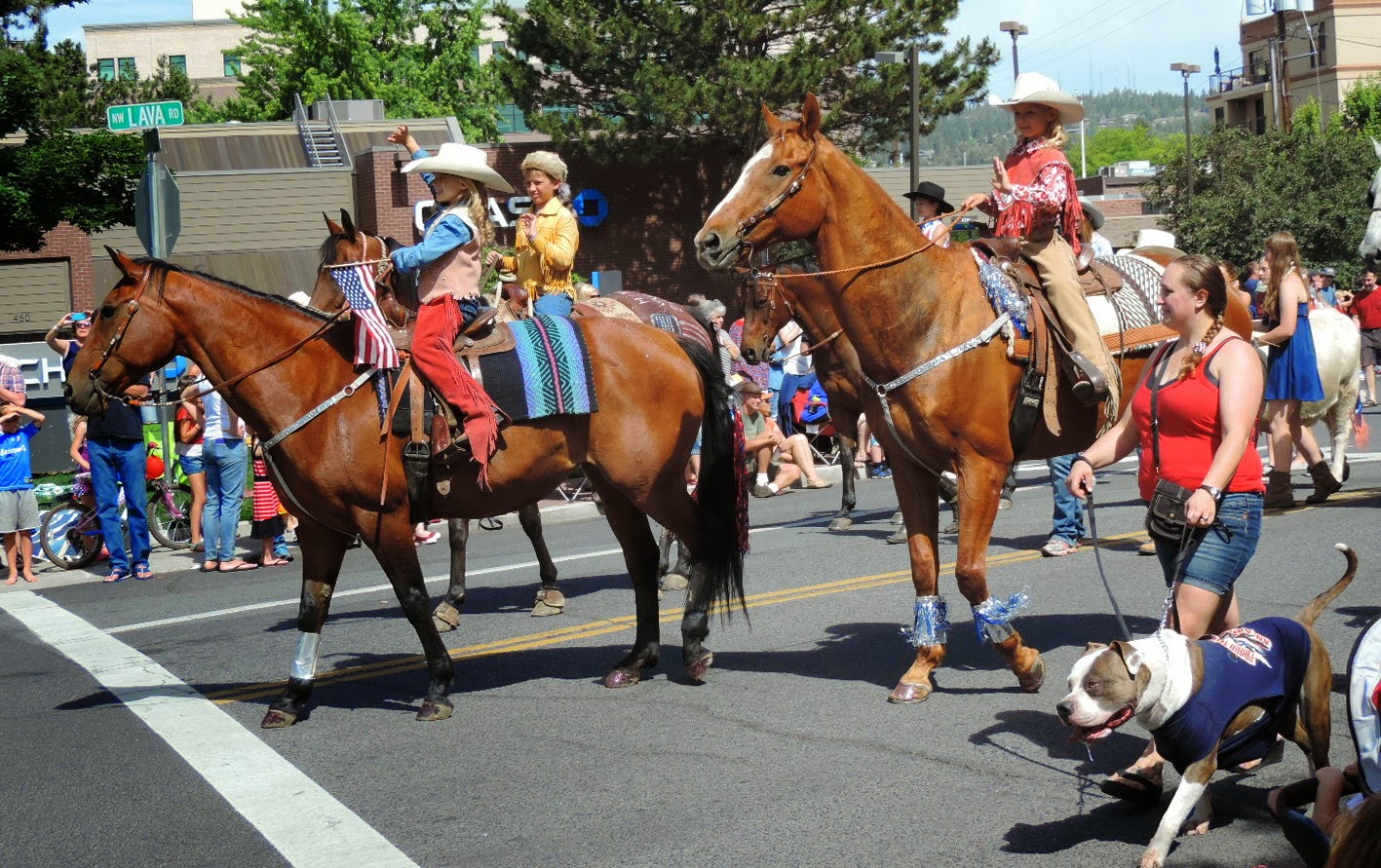
Something fun today. It's all about optical illusion, how our eyes see things, and things seem to be moving, while they are actually stationery. This first one above is a photo I took during the Pet Parade in Bend. As this cowgirl Makenna was riding a horse, another cowboy behind her was waving the American flag, and I caught the image as if the cowgirl was waving the flag.
A scene from the World Cup, or playing with the sun?
Look to the side of this picture, and the circles start to turn...

Sunday, July 6, 2014

The Malta skyline

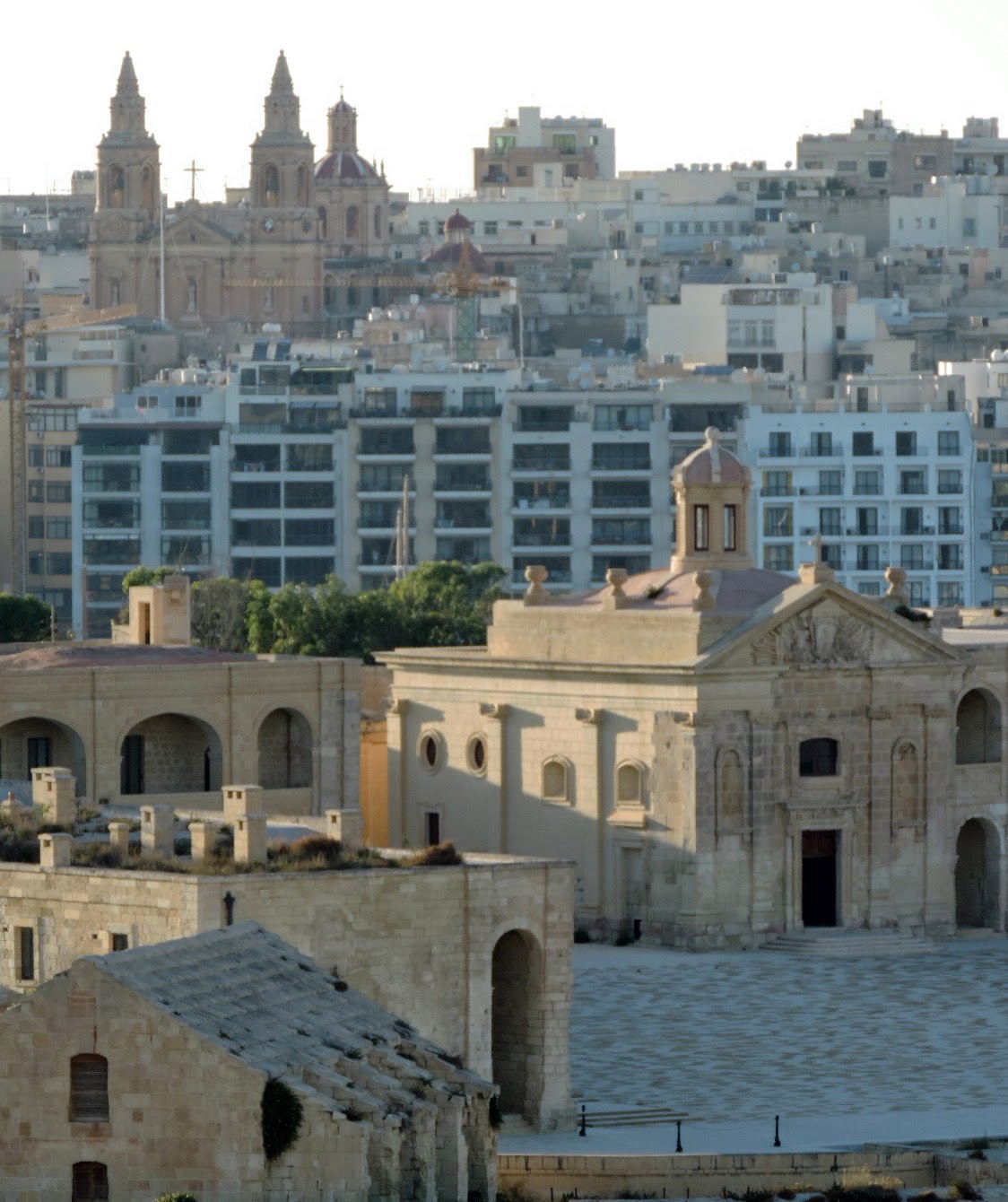
One of the most impressive sights you will always remember from Malta is the predominantly religious skyline dotted with churches, steeples and domes of various churches spread around the island. 
 
These are some of the best photos I took during my recent visit, and thanks to my Nikon camera, a splendid zoom lens helped me get closer to some of the domes that were as much as 15 miles away. And if there isn’t a church or a dome on the skyline, you can very easily get a statue or a monument that features a statue.

Saturday, July 5, 2014

Bend Pet Parade

Two nice horses taking part in the parade, ridden by two cowgirls
Yesterday was a very special day for all animal-lovers, and the furry animals had their day in the streets of my parish in Bend, as a big parade took place in downtown Bend. These photos are just a few of those I took while mingling with local folks. It felt like the blessing of animals I do on the feast of St Francis of Assisi as thousands of dogs, horses, cats, turkeys, ducks, snakes, lizards, parrots, goats and others that I may have missed took to the streets of Bend in a most colorful and crowded parade. 
Yet I was surprised how no marching bands, no veterans, nothing whatsoever that reflects the freedom that we cherish was visible. The only hint was a solitary flag-bearer in the very beginning of the parade. Nonetheless during my morning Mass I prayed for the gift of freedom we have in our country and remembered the members of our military who are in harm’s way, far away from the peace and tranquility we experience in our midst.
Is it a lion? or is it a dog with a mane?
A tiny dog flying away with balloons

Friday, July 4, 2014

Independence Day

 
Independence Day Prayer
Lord, we stand today as our forefathers have stood before You in times gone by, celebrating our history and reveling in all the great things that our country has achieved.
On this day we rejoice in the favor You have graciously given us.
We thank You for the blessings of liberty, for this generation and for the generations to come.
We thank You for our independence, peace and for all those who have bravely given their lives in the defense of freedom and justice.
We thank You that Your provident hand has given us so much.
Yet as a nation and people we have not always chosen the right way.
We ask You to forgive us for these times.
On this day we commit ourselves to wholeheartedly honoring and serving You.
With everything that we are, we lay our lives before You.
Make us a generous people, a holy nation, a grateful country.
A people set aside to love You forever,
For the sake of the land of the brave and free, and the peoples and nations of this world.
The Declaration of Independence signed in 1776
Today, we do not presume Your grace for our country. Our land is in need of You, Our people are in need of You, Our industry and business is in need of You.
May we look only to You this Independence Day, dependent on You.
Please come now by Your glorious Holy Spirit,
Breathe new life into the sinews of this nation. May justice flow like rivers,
And righteousness like a never failing stream, until the whole of our country is covered with Your glory, as the waters cover the sea.
We ask all this in the wonderful name of Jesus, Who lives and reigns with You and the Holy Spirit. One God, now and for all eternity. Amen.

Thursday, July 3, 2014

Saint Thomas

Caravaggio - "The incredulity of St. Thomas"
One of the 12 apostles chosen by Jesus, we honor Saint Thomas today, also known as Didymus, the Twin, who is very much revered in India, especially in southern India, in the Kerala district. He is known to have ministered in India before his martyrdom. According to tradition, the Apostle reached Muziris, India in 52 AD and baptized several people who are today known as St Thomas Christians or Nasranis. After his death, the reputed relics of Saint Thomas the Apostle were enshrined as far as Mesopotamia in the 3rd century, and later moved to various places. In 1258, some of the relics were brought to Abruzzo in Ortona, Italy, where they have been held in the Church of Saint Thomas the Apostle. But Thomas, as faithful as he was to his Master, will always be remembered for his incredulity when Jesus was risen from the dead, and would not believe until he saw with his eyes, and touched with his hands the wounds of Jesus. Then he uttered a very popular phrase “My Lord and my God.” This is a common expression phrase many people use during the elevation of the Body of Christ and the Blood of Christ during Mass. One of the most famous paintings of St Thomas is the one by Caravaggio, precisely at the moment when he places his finger in the side of Jesus after the Resurrection.

Wednesday, July 2, 2014

12 things to remember

 The value of time.
The success of perseverance.
The pleasure of working.
The dignity of simplicity.
The worth of character.
The power of example.
The influence of life.
The obligation of duty.
The virtue of patience.
The improvement of talent.
The wisdom of economy.
The joy of originating.

Tuesday, July 1, 2014

Malta fireworks

Fireworks set up in front of St Philips's church, Zebbug
In view of the fireworks display that will be shown this coming Friday, Independence Day here in the USA, I share with you today something that takes place behind the scenes in Malta just before a display of land fireworks, called "Catherine Wheels." This took place in the town of Zebbug in Malta on June 6, as preparations were being made for this incredible display, that is complicated, massive and absolutely spectacular. 
A computerized set-up and last-minute adjustments of the fireworks.
Some of the displays were set up with a computerized coordination that is complicated and technically difficult to coordinate. The only problem is that they let them off late at night, and I was not present during the actual display, but to get an idea what they may have looked like, I have another photo I took a few years ago from the feast of St Julian's, a similar display of "Catherine Wheels" which was done on a much smaller scale.
"Catherine Wheels" display from St Julian's feast in 2006